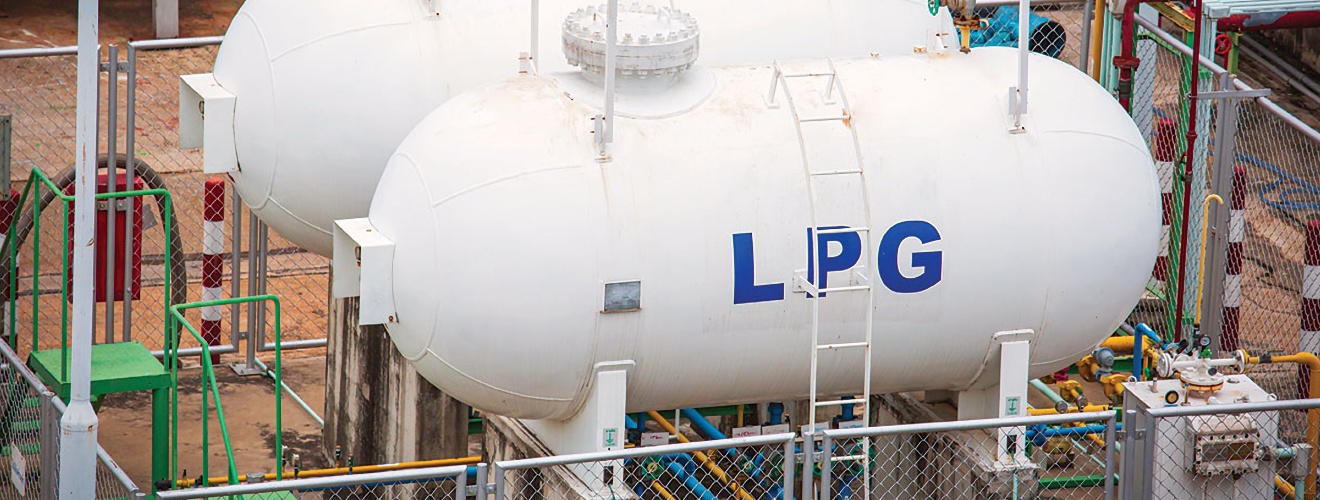
Propane and butane found in refinery gas streams are generally saturated hydrocarbons (alkanes)
The gas streams from most of the refinery process units contain methane, ethane, but also propane and butanes, or: LPG. In most cases these propane and butane gases are saturated gases, so no double carbon-carbon bonds, except when produced by an non-hydrogen cracking process.
LPG is a mixture of propane and butane molecules
Propane has unique favourable characteristics that have found favour in many applications, such as automotive fuels and particularly domestic and industrial fuel uses. Propane has a low boiling point, so without any additional equipment will evaporate at low temperatures.
Butanes, typically normal butane and isobutane. Normal butane is predominantly used as gasoline blending component due to its volatility characteristics. In addition it is used as a chemical feedstock and of course as LPG mixed with propane.
Cracked LPG contains unsaturated propane and butane molecules
Isobutane however is a typical feedstock for an alkylation plant, to produce alkylate, a high quality and valuable liquid gasoline blending component. Also isobutane, after dehydrogenation to isobutene, will find its way to an MTBE production plant.